

Attic Insulation Services in Plano, TX
Plano’s biggest insulation problem isn’t damage. It’s age. Most of the city’s housing was built during the 1980s and 1990s, when R-19 was considered adequate and air sealing wasn’t part of the conversation. That insulation has been sitting in attics for 30 to 40 years. It has settled, compressed, and lost R-value every year since.
The result: Plano homeowners pay more to cool their homes than they should. Air conditioning accounts for 50 to 60 percent of a North Texas electric bill from June through September. When your attic has R-19 instead of R-38, your AC is working twice as hard to hold temperature.
Green Attics installs blown-in fiberglass and spray foam attic insulation in Plano, TX, built to meet or exceed R-38. We also handle air sealing, radiant barriers, insulation removal, and ventilation upgrades. Every project starts with a free Certified Performance Report (CPR) that tells you exactly what your attic has, what it should have, and what each fix would cost.


Request a Service
R-Value Requirements for Plano Homes
Plano sits in IECC Climate Zone 3, the same as the rest of the DFW metroplex. Under current Texas energy code, attic insulation must reach a minimum R-value of R-38. Wall insulation requires R-20 (or R-13 cavity plus R-5 continuous). Ducts in unconditioned spaces need R-8.
Here’s the reality by construction era in Plano:
1980 to 1995 builds (Willow Bend, Deerfield, Hunters Glen, Old Shepard Place, Castlemere). These homes were built to R-19 or R-22. After 30 to 40 years of settling, most now sit at an effective R-13 to R-16. The gap between current performance and the R-38 code standard is massive. These homes get the most dramatic improvement from a full removal, air seal, and R-38 blown-in reinstall.
1995 to 2010 builds (Legacy area, Stoney Hollow, Ridgeview Ranch). These homes typically started with R-30 blown-in or batts. Settling and uneven coverage bring many of them down to R-22 to R-26. Adding blown-in on top of the existing material can bring them up to R-38 without the cost of removal.
2010 to present (northwest Plano infill, newer Legacy subdivisions). These may meet R-38 on paper, but builder installations are often uneven. Thin spots near eaves, around HVAC equipment, and at attic access points are common. Our CPR audit measures depth at multiple points across the attic to verify actual coverage.
Green Attics measures your current insulation during every energy audit and recommends the right approach to reach R-38.
Professional Attic Insulation Services in Plano, TX
Plano’s housing stock is mostly established, not new. That changes the insulation conversation. Many homes here need removal of old material before new insulation goes in. Others just need a top-up to bring settled fiberglass from R-19 back to R-38. We assess each attic individually and match the right material to the job.
Blown-In Fiberglass Insulation
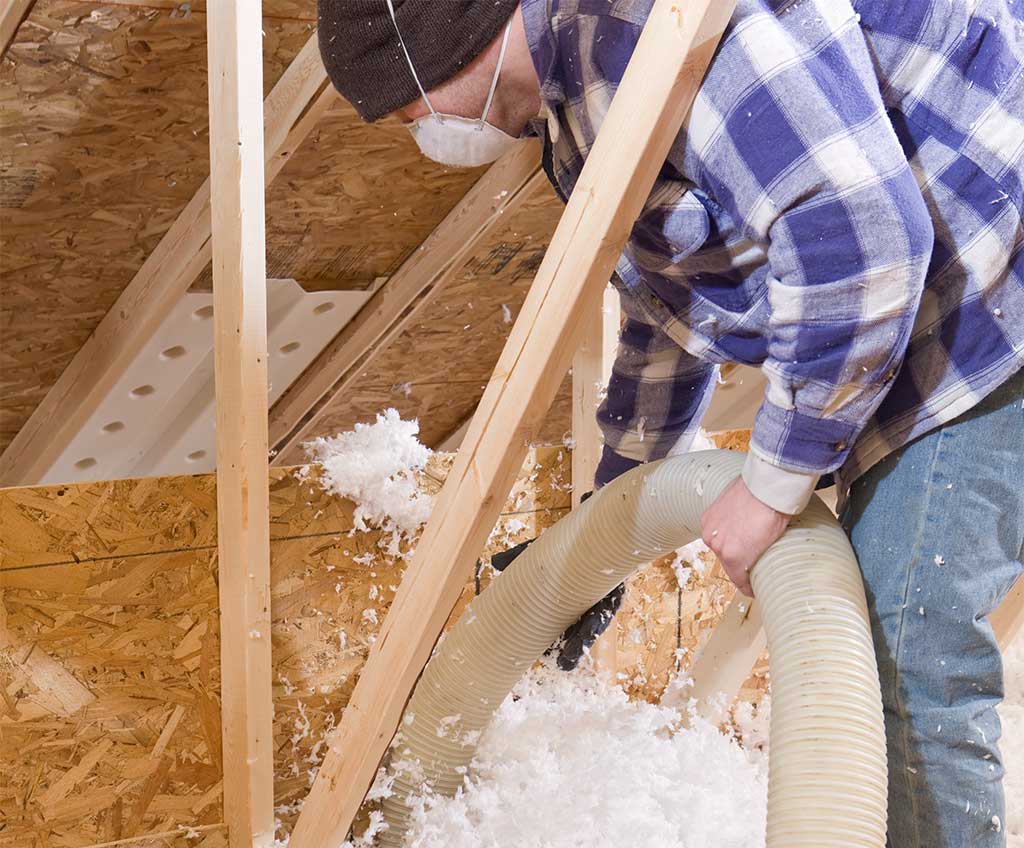
Blown-in fiberglass is a popular attic insulation upgrade for Plano homes. It fills gaps around joists, wiring, and vents for complete coverage, improving energy efficiency, sound control, and indoor comfort.
Learn More
Spray Foam Insulation
Spray foam provides insulation and air sealing in one application. It works well for roof decks, walls, and tight spaces, helping reduce air leaks while creating a stronger thermal and moisture barrier.
Radiant Barrier Installation
Radiant barriers reflect heat away from your attic, helping lower temperatures during Plano’s hot summers. This reduces heat transfer, improves cooling efficiency, and helps protect your insulation.
Insulation Removal
Old insulation can lose effectiveness due to age, moisture, or contamination. Our team removes worn-out insulation, cleans the attic space, and prepares it for a fresh, efficient installation.
Solar Attic Fans
Air Sealing
Air sealing closes gaps around attic openings, vents, and fixtures to stop energy loss. This step improves insulation performance and helps maintain better indoor temperatures year-round.
Blown-In vs. Spray Foam: Choosing the Right Insulation for Your Plano Home
Both materials work in Plano’s climate. The choice depends on where the insulation goes and what problem it needs to solve.
Blown-in fiberglass
is the cost-effective choice for attic floors. It reaches R-38 at 12 to 13 inches, installs in a few hours, and typically costs $1.50 to $2.50 per square foot installed. For a 1,500 square foot attic, that’s roughly $2,250 to $3,750.
Spray foam
runs $3 to $7 per square foot installed, depending on open-cell vs closed-cell and depth. For a 1,500 square foot attic, spray foam ranges from $4,500 to $10,500. The premium buys you air sealing that blown-in alone can’t provide.
When to combine both:
Blown-in on the attic floor for bulk thermal resistance. Spray foam at the rim joist, around duct boots, at can light housings, and at top-plate gaps. This combined approach is often the best fit for Plano’s 1980s and 1990s homes, where the attic floor needs R-38 coverage and the penetrations need sealing.
Signs Your Plano Home Needs an Insulation Upgrade
- Your insulation is visible in the attic and sits below the tops of the ceiling joists
- Second floor stays warmer than the first floor, even with the AC running all day
- Summer electric bills regularly exceed $250 per month
- Your HVAC runs constantly but can't hold the set temperature during afternoon heat
- You notice dust or stale air in rooms directly below the attic
- Your home was built before 2000 and the insulation has never been replaced
If any of these apply, our CPR audit measures your current insulation depth, maps air leaks with thermal imaging, and gives you a prioritized upgrade plan.
Why Plano Homeowners Choose Green Attics
Green Attics is family-owned and operates across Collin County. We’ve insulated homes in every part of Plano, from the established neighborhoods off Parker Road to newer builds near Legacy West. We know what 1980s attics look like after 40 years, and we know what it takes to fix them.
Every CPR audit shows you the real numbers. You see photos of your attic, depth measurements across the floor, and a clear breakdown of what each upgrade costs and saves. No sales pressure. No upselling.
How Our Process Works
-
Free CPR Audit.
We inspect insulation depth, air leaks, ductwork condition, and attic ventilation using thermal imaging and pressure testing. -
Detailed Report.
You get a visual breakdown of where your home wastes energy and how much each problem costs you per month. -
Customized Plan.
You choose the upgrades that fit your goals and budget. -
Clean, Same-Day Installation.
Most attic insulation projects in Frisco are done in one day. -
Follow-Up Support.
We stand behind our work and remain available for questions or service.
Plano Home Types We Commonly Insulate
1980s ranch and split-level homes (Hunters Glen, Old Shepard Place, east Plano). These often have original R-19 fiberglass batts that have settled to R-13 or less. Low-pitched attics with tight access make blown-in the practical choice. Full removal is usually recommended because the old batts are compressed and contaminated.
1990s two-story homes (Willow Bend, Deerfield, Castlemere). Larger homes with complex attic layouts, multiple HVAC zones, and dozens of can lights. The second floor is almost always warmer than the first. Air sealing at the can lights and top plates, combined with blown-in to R-38, corrects the temperature imbalance.
2000s and newer construction (Legacy, Ridgeview Ranch, northwest Plano). Homes that may have adequate depth but inconsistent coverage. Thin spots near eaves and around HVAC returns are common. A top-up with blown-in and targeted air sealing closes the gaps without a full reinstall.
What You Get After a Professional Insulation Upgrade
- Lower monthly energy bills, typically 15 to 30 percent for homes upgrading from R-19 or below
- Even indoor temperatures across floors and rooms
- Reduced HVAC strain, fewer repair calls, and a longer system life
- Cleaner indoor air when paired with duct cleaning and air sealing
- Quieter living spaces from improved sound absorption
- Higher resale value with documented energy improvements
Plano homes on the Oncor grid average about 1,140 kWh per month. Cutting that by 15 to 20 percent through insulation and air sealing saves $300 to $500 per year at current rates. Homes upgrading from R-19 or below tend to see savings at the higher end.
Common Insulation Problems in Plano Homes
- Original 1980s or 1990s insulation settled to R-13 to R-19, well below the R-38 code standard
- Attic temperatures exceeding 150°F in summer with no radiant barrier
- Dozens of unsealed can lights, plumbing stacks, and electrical penetrations creating air leaks
- Duct leaks wasting 20 to 30 percent of conditioned air before it reaches living spaces
- Moisture accumulation that has compressed insulation and created mold-friendly conditions
- Rodent contamination in attics that have been undisturbed for decades
Our solutions combine insulation, air sealing, radiant barriers, solar attic fans, and duct work to fix these problems at the source.
Hear from our happy Frisco customers
- 4.9
Areas We serve
Insulation Services Near You
Green Attics serves homeowners throughout the Dallas-Fort Worth metroplex. We have dedicated service pages for each city we cover. Find your area.
Don’t see your city? We likely cover it. View all areas we serve or call us now to confirm.
Frequently Asked Questions
How do I know if my Plano home needs new attic insulation?
Look in the attic. If you can see the tops of the ceiling joists above the insulation, you’re below R-38. If your home was built before 2000, the original insulation has almost certainly settled below its installed depth. Other signs include uneven temperatures between floors and summer electric bills above $250. Our CPR audit measures depth at multiple points and gives you exact numbers.
What type of insulation is best for a Plano attic?
Blown-in fiberglass is the best value for most Plano attic floors. It reaches R-38 at 12 to 13 inches and installs in one day. Spray foam is the better choice for roof decks, knee walls, and areas with significant air infiltration. Most Plano projects use blown-in for the floor and spray foam at penetration points.
How much does attic insulation cost in Plano?
Blown-in fiberglass runs $1.50 to $2.50 per square foot installed. Spray foam runs $3 to $7 per square foot. For a 1,500 square foot attic, blown-in typically costs $2,250 to $3,750. Spray foam ranges from $4,500 to $10,500. If your home needs insulation removal first, that adds roughly $1.50 to $3 per square foot to the total.
Should I remove old insulation or add on top of it?
It depends on the condition of the existing material. If your current insulation is clean, dry, and evenly distributed, adding blown-in on top is the more cost-effective option. If the old material is contaminated by rodents, water-stained, compressed flat, or more than 30 years old, full removal is the better path. Our CPR audit assesses the condition and recommends the right approach.
What R-value does my Plano attic need?
Plano is in IECC Climate Zone 3. The code minimum is R-38 for attics. Most homes built before 2000 have R-19 or less after decades of settling. We measure your actual R-value during the CPR audit and recommend the right depth and material to meet or exceed code.
How long does attic insulation installation take?
Most blown-in insulation projects in Plano are done in one day. Projects that include insulation removal, sanitizing, and reinstalling can also be completed in a single day for most homes.
Are there tax credits for insulation in 2026?
The federal Section 25C Energy Efficient Home Improvement Credit expired December 31, 2025. As of 2026, that credit is no longer available for new projects. Local utility rebates may still apply. We stay current on available programs and will let you know during your CPR audit. Consult your tax advisor for specific guidance.
Why is my second floor always hotter than my first floor?
In Plano’s two-story homes, the second floor sits directly below the attic. If the attic insulation has settled below R-25 and the can lights are unsealed, heat radiates down into the upper rooms all day. Air sealing at the penetration points and adding blown-in to R-38 typically brings the second floor within 2 to 3 degrees of the main level.
Schedule Your
Insulation Audit in Plano
Ready to find out what 30 years have done to your attic? Green Attics starts every project with a free CPR audit and finishes with measurable comfort, real savings, and healthier air.
Call (214) 987-6198 or book your free audit online today.
