

Attic Insulation Services in Frisco, TX
Frisco is one of the fastest-growing cities in America, with over 225,000 residents and new neighborhoods still under construction. But rapid growth comes with a trade-off. Many homes here were built fast, and the attic insulation that went in during construction was the minimum the builder could get away with.
If your Frisco home has builder-grade insulation at R-30 or thin fiberglass batts that have settled over the past decade, your attic is bleeding energy every summer. Air conditioning accounts for 50 to 60 percent of a North Texas electric bill from June through September. That’s money leaving through your ceiling.
Green Attics installs blown-in fiberglass and spray foam attic insulation in Frisco, TX, built to meet or exceed R-38. We also handle air sealing, radiant barriers, insulation removal, and ventilation upgrades. Every project starts with a free Certified Performance Report (CPR) so you know exactly where your home stands before spending a dollar.


Request a Service
Attic Insulation Services for Frisco Homes
Frisco’s housing stock is mostly newer construction, but newer doesn’t mean properly insulated. Large two-story floor plans, bonus rooms over garages, and high ceilings create more attic space that needs coverage. We match the material and method to your home’s specific layout.
Blown-In Fiberglass Insulation
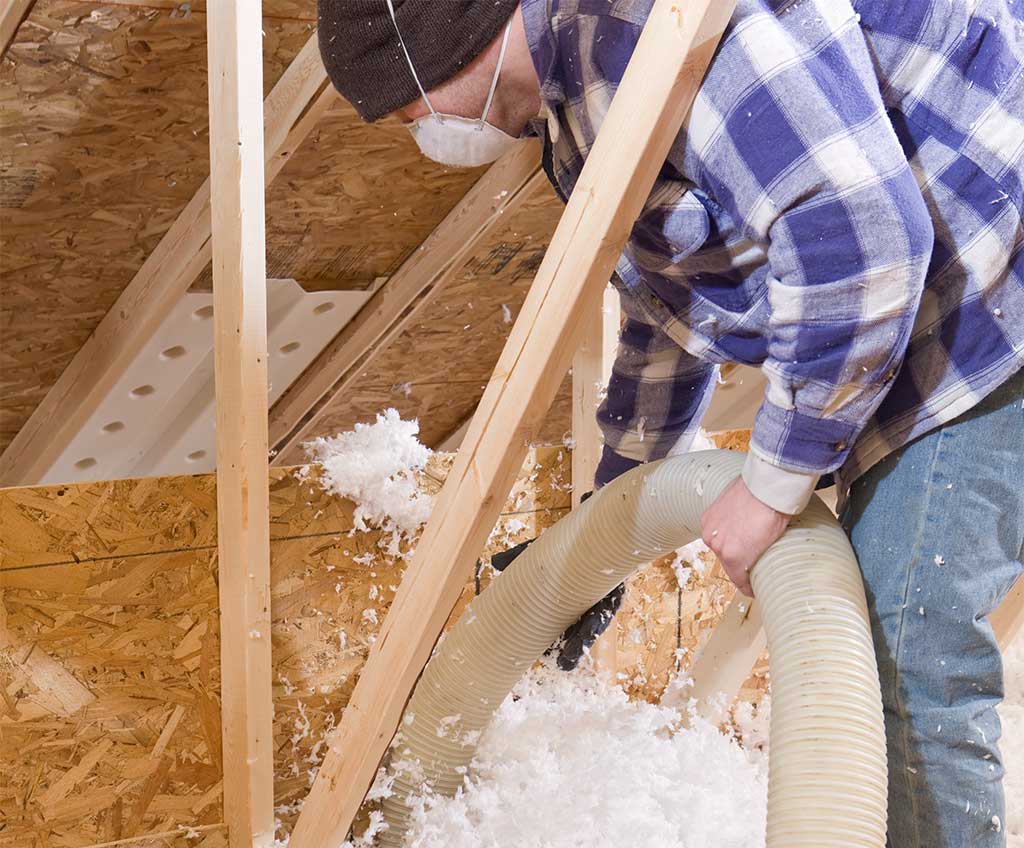
Blown-in fiberglass is a cost-effective way to improve attic insulation. It fills gaps around wiring, joists, and vents for full coverage, helping Frisco homeowners boost energy efficiency and indoor comfort.
Learn More
Spray Foam Insulation
Spray foam provides insulation and air sealing in one step. It works well for attic roofs, walls, and tight spaces, creating a stronger thermal barrier and reducing unwanted air leaks.
Radiant Barrier Installation
Radiant barriers reflect heat away from the attic, helping lower attic temperatures during hot Frisco summers. This reduces heat transfer and helps your AC system work more efficiently.
Insulation Removal
Old or damaged insulation can affect energy performance and air quality. Our team safely removes contaminated or worn-out insulation to prepare your attic for a clean new installation.
Air Sealing
Air sealing closes gaps around lights, vents, and attic openings to prevent air leaks. This helps your insulation perform better and improves your home’s overall energy efficiency.
Solar Attic Fans
Solar attic fans improve attic ventilation by removing trapped hot air. Powered by sunlight, they help reduce attic heat, protect insulation, and lower the workload on your cooling system.
R-Value Requirements for Frisco Homes
Frisco sits in IECC Climate Zone 3. Under current Texas energy code, attic insulation must reach a minimum R-value of R-38. Wall insulation requires R-20 (or R-13 cavity plus R-5 continuous). Ducts in unconditioned spaces need R-8.
Here’s the reality for most Frisco homes by construction era:
2000 to 2010 builds typically have R-30 fiberglass batts or less. These homes are 15 to 25 years old, and the original insulation has likely settled 10 to 20 percent below its installed depth. That puts many of them at effective R-25 or lower.
2010 to 2020 builds often have R-30 to R-38 blown-in, but inconsistent coverage is common. Corners, eaves, and areas around HVAC equipment are frequently thin. Air sealing at top plates and penetrations was often skipped during construction.
2020 to present may meet R-38 on paper, but builder-installed insulation is sometimes uneven. Our CPR audit uses depth measurements at multiple points across the attic to verify actual coverage, not just what the permit says.
Green Attics measures your current insulation depth during every energy audit and recommends the right material and thickness to bring your home to or above R-38.
Blown-In vs. Spray Foam: Which One Fits Your Frisco Home?
Both materials perform well in Frisco’s climate. The right choice depends on where the insulation goes and what problem you’re solving.
Blown-in fiberglass is the cost-effective choice for open attic floors. It reaches R-38 at 12 to 13 inches, installs in a few hours, and typically costs $1.50 to $2.50 per square foot installed. For a 1,500 square foot attic, that’s roughly $2,250 to $3,750.
Spray foam runs $3 to $7 per square foot installed, depending on open-cell vs closed-cell and depth. A 1,500 square foot attic can range from $4,500 to $10,500. The higher cost reflects the air-sealing benefit, which blown-in alone cannot match.
When to combine both: Use blown-in on the attic floor for bulk thermal resistance. Apply spray foam at the rim joist, around duct boots, at can light penetrations, and at the knee walls behind bonus rooms. This combined approach gives you R-38 coverage and a tight building envelope without the full cost of spraying the entire attic.
Signs Your Frisco Home Needs an Insulation Upgrade
- Second floor runs 5 to 10 degrees warmer than the main level, even with the AC on
- Summer electric bills regularly exceed $250 per month
- Your HVAC runs constantly but can't keep up during afternoon heat
- You can see the tops of the joists when you look into the attic, meaning the insulation sits below recommended depth
- Rooms above the garage are always uncomfortable
- You hear excessive road noise from DNT or nearby construction
If any of these apply, our CPR audit will measure your current insulation, map air leaks, and give you a prioritized upgrade plan.
Why Frisco Homeowners Choose Green Attics
Green Attics operates from a Frisco office, which means fast response times and a team that knows the neighborhoods. We’ve insulated homes across Frisco’s master-planned communities and older sections alike.
We’re family-owned, not a franchise. Every CPR audit shows you the real numbers, not a sales pitch. You see exactly what your attic looks like, where the gaps are, and what each fix would cost. Respectful crews, punctual arrivals, and thorough cleanups are the standard on every project.
How Our Process Works
-
Free CPR Audit.
We inspect insulation depth, air leaks, ductwork condition, and attic ventilation using thermal imaging and pressure testing. -
Detailed Report.
You get a visual breakdown of where your home wastes energy and how much each problem costs you per month. -
Customized Plan.
You choose the upgrades that fit your goals and budget. -
Clean, Same-Day Installation.
Most attic insulation projects in Frisco are done in one day. -
Follow-Up Support.
We stand behind our work and remain available for questions or service.
Frisco Home Types We Commonly Insulate
Two-story homes with bonus rooms
(common in Phillips Creek Ranch, Newman Village, Richwoods). The bonus room above the garage is usually the hottest room in the house. Spray foam at the knee walls and roof deck of the bonus space solves this. Blown-in on the main attic floor handles the rest.
Large single-story homes
(common in Frisco Lakes, Heritage). These have expansive attic footprints that lose a lot of energy if insulation is thin or uneven. Blown-in fiberglass to R-38 across the full attic floor is the most cost-effective fix.
Homes near The Star and Stonebriar
(early 2000s builds). These often have original fiberglass batts that have settled below R-25. Full insulation removal, air sealing, and a new blown-in install brings them up to current code and drops energy bills noticeably.
What You Get After a Professional Insulation Upgrade
- Lower monthly energy bills, typically 15 to 30 percent for homes upgrading from R-30 or below
- Even indoor temperatures across floors and rooms
- Reduced HVAC strain, which means fewer repair calls and a longer system life
- Cleaner indoor air when paired with duct cleaning and air sealing
- Quieter living spaces from improved sound absorption
- Higher resale value with documented energy improvements
Frisco homeowners who add air sealing to their insulation upgrade typically see savings on the higher end of that 15 to 30 percent range.
Hear from our happy Frisco customers
- 4.9
Areas We serve
Insulation Services Near You
Green Attics serves homeowners throughout the Dallas-Fort Worth metroplex. We have dedicated service pages for each city we cover. Find your area.
Don’t see your city? We likely cover it. View all areas we serve or call us now to confirm.
Frequently Asked Questions
How do I know if my Frisco home needs new attic insulation?
Look in the attic. If you can see the tops of the ceiling joists above the insulation, you’re below R-38. Other signs include uneven room temperatures, a second floor that’s always warmer than the first, and summer electric bills above $250. Our CPR audit measures your current depth and gives you exact numbers.
What type of insulation is best for a Frisco attic?
Blown-in fiberglass is the best value for most attic floors. It reaches R-38 at 12 to 13 inches and installs in one day. Spray foam is better for roof decks, bonus rooms, and areas where air infiltration is the main problem. Many Frisco projects combine both for full coverage.
How much does attic insulation cost in Frisco?
Blown-in fiberglass runs about $1.50 to $2.50 per square foot installed. Spray foam runs $3 to $7 per square foot depending on type and depth. For a 1,500 square foot attic, blown-in typically costs $2,250 to $3,750. Spray foam for the same space ranges from $4,500 to $10,500. Our CPR audit identifies where each material makes the most sense so you spend where it counts.
How long does attic insulation installation take?
Most blown-in insulation projects are done in one day. Spray foam may take one to two days depending on the scope. Combined projects that include removal and reinstall can also be completed in a single day for most Frisco homes.
What R-value does my Frisco attic need?
Frisco is in IECC Climate Zone 3. The code minimum is R-38 for attics. Many Frisco homes built before 2015 sit at R-30 or lower, especially after insulation settles over time. We measure your current level during the CPR audit.
How long does attic insulation last?
Fiberglass insulation can last 80 to 100 years if it stays dry and undisturbed. But settling, moisture, rodent activity, and renovation work all reduce its effective R-value over time. If your insulation is more than 15 years old, it’s worth having it inspected. Our CPR audit checks depth, condition, and coverage across the entire attic.
Are there tax credits for insulation in 2026?
The federal Section 25C Energy Efficient Home Improvement Credit expired December 31, 2025. As of 2026, that credit is no longer available for new projects. Local utility rebates and incentive programs may still apply. We stay current on available options and will let you know during your CPR audit. Consult your tax advisor for the latest details.
Why is the bonus room above my garage always hot?
The floor, walls, and ceiling of a bonus room are all exposed to unconditioned space. If the knee walls, roof deck, and floor cavity aren’t insulated and sealed, heat pours in from every direction. Spray foam at the knee walls and roof line, combined with air sealing, is the most effective fix for this problem.
Book Your
Free Insulation Audit in Frisco
Ready to find out what’s happening in your attic? Green Attics starts every project with a free CPR audit and finishes with measurable comfort, real savings, and healthier air.
Call (214) 987-6198 or book your free audit online today.
